Connect With Us
Blog
Items filtered by date: November 2025
Friday, 28 November 2025 00:00
Are You Suffering From Ingrown Toenails?

If left untreated, an ingrown toenail can lead to more serious concerns, such as an infection. Knowing proper nail care can help in the prevention of an ingrown toenail. Give us a call, and get treated!
Tuesday, 25 November 2025 00:00
Understanding Different Types of Foot Pain

Foot pain can arise from many causes, and its location often reveals the problem. Pain in the heel may signal plantar fasciitis or a heel spur, while pain in the ball of the foot may result from metatarsalgia or a neuroma. Aching arches can stem from flat feet or overuse, and pain along the outer edge might indicate a stress fracture or tendon irritation. Toe pain can develop from bunions, hammertoes, or ingrown nails. Each type of pain may feel sharp, burning, throbbing, or dull, depending on the underlying condition. Wearing improper shoes, standing for long hours, or overtraining can make symptoms worse. If you are experiencing ongoing or severe foot pain that affects your mobility, it is suggested that you see a podiatrist for an accurate diagnosis, and a treatment plan tailored to your needs.
Foot Pain
Foot pain can be extremely painful and debilitating. If you have a foot pain, consult with one of our podiatrists from Advanced Foot and Ankle Centers, Inc.. Our doctors will assess your condition and provide you with quality foot and ankle treatment.
Causes
Foot pain is a very broad condition that could be caused by one or more ailments. The most common include:
- Bunions
- Hammertoes
- Plantar Fasciitis
- Bone Spurs
- Corns
- Tarsal Tunnel Syndrome
- Ingrown Toenails
- Arthritis (such as Gout, Rheumatoid, and Osteoarthritis)
- Flat Feet
- Injury (from stress fractures, broken toe, foot, ankle, Achilles tendon ruptures, and sprains)
- And more
Diagnosis
To figure out the cause of foot pain, podiatrists utilize several different methods. This can range from simple visual inspections and sensation tests to X-rays and MRI scans. Prior medical history, family medical history, and any recent physical traumatic events will all be taken into consideration for a proper diagnosis.
Treatment
Treatment depends upon the cause of the foot pain. Whether it is resting, staying off the foot, or having surgery; podiatrists have a number of treatment options available for foot pain.
If you have any questions, please feel free to contact our offices located in Clovis and Madera, CA . We offer the newest diagnostic and treatment technologies for all your foot care needs.
Tuesday, 18 November 2025 00:00
Diagnosing Peripheral Artery Disease
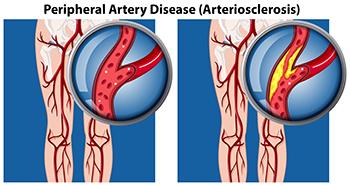
Peripheral artery disease, or PAD, occurs when blood flow to the feet is restricted due to narrowed arteries. Reduced circulation often causes discomfort while walking, foot fatigue, or slow-healing sores on the toes or heels. A podiatrist can perform diagnostic tests, such as the ankle-brachial index, which compares blood pressure in the ankle to that in the arm to detect an arterial blockage. Additional imaging, like a Doppler ultrasound, can evaluate the severity of reduced blood flow in the foot and ankle. Without proper treatment, PAD can lead to tissue damage or, in severe cases, limb loss. Early diagnosis is vital to prevent these serious complications and preserve mobility. If you have symptoms of peripheral artery disease, it is suggested that you schedule an appointment with a podiatrist for a diagnosis and appropriate treatment options.
Peripheral artery disease can pose a serious risk to your health. It can increase the risk of stroke and heart attack. If you have symptoms of peripheral artery disease, consult with one of our podiatrists from Advanced Foot and Ankle Centers, Inc.. Our doctors will assess your condition and provide you with quality foot and ankle treatment.
Peripheral artery disease (PAD) is when arteries are constricted due to plaque (fatty deposits) build-up. This results in less blood flow to the legs and other extremities. The main cause of PAD is atherosclerosis, in which plaque builds up in the arteries.
Symptoms
Symptoms of PAD include:
- Claudication (leg pain from walking)
- Numbness in legs
- Decrease in growth of leg hair and toenails
- Paleness of the skin
- Erectile dysfunction
- Sores and wounds on legs and feet that won’t heal
- Coldness in one leg
It is important to note that a majority of individuals never show any symptoms of PAD.
Diagnosis
While PAD occurs in the legs and arteries, Podiatrists can diagnose PAD. Podiatrists utilize a test called an ankle-brachial index (ABI). An ABI test compares blood pressure in your arm to you ankle to see if any abnormality occurs. Ultrasound and imaging devices may also be used.
Treatment
Fortunately, lifestyle changes such as maintaining a healthy diet, exercising, managing cholesterol and blood sugar levels, and quitting smoking, can all treat PAD. Medications that prevent clots from occurring can be prescribed. Finally, in some cases, surgery may be recommended.
If you have any questions, please feel free to contact our offices located in Clovis and Madera, CA . We offer the newest diagnostic and treatment technologies for all your foot care needs.
Tuesday, 11 November 2025 00:00
Metatarsal Stress Fractures Among Athletes

Metatarsal stress fractures occur when one or more of the long bones in the foot develop cracks from repetitive force, rather than a single injury. These hairline fractures can affect the head, shaft, or base of the metatarsal, and are especially seen in runners, basketball players, ballet dancers, and soccer players. Runners often develop stress fractures in the first and second metatarsals due to the repetitive bending forces placed on the forefoot. Basketball players are prone to avulsion-type fractures of the fifth metatarsal from sudden forces during jumping or rapid direction changes. Ballet dancers put intense compressive forces on the second and third metatarsals when dancing en pointe, which stresses the Lisfranc joints. Additionally, soccer players frequently experience torsional stress fractures of the fifth metatarsal, often referred to as Jones fractures. A podiatrist can evaluate foot structure, provide advanced imaging, and recommend treatment or surgery, if necessary. If you have metatarsal foot pain, it is suggested that you schedule an appointment with a podiatrist for an exam and appropriate treatment.
Activities where too much pressure is put on the feet can cause stress fractures. To learn more, contact one of our podiatrists from Advanced Foot and Ankle Centers, Inc.. Our doctors can provide the care you need to keep your pain free and on your feet.
Dealing with Stress Fractures of the Foot and Ankle
Stress fractures occur in the foot and ankle when muscles in these areas weaken from too much or too little use. The feet and ankles then lose support when walking or running from the impact of the ground. Since there is no protection, the bones receive the full impact of each step. Stress on the feet can cause cracks to form in the bones, thus creating stress fractures.
What Are Stress Fractures?
Stress fractures occur frequently in individuals whose daily activities cause great impact on the feet and ankles. Stress factors are most common among:
- Runners
- People affected with Osteoporosis
- Tennis or basketball players
- Gymnasts
- High impact workouts
Symptoms
Pain from the fractures occur in the area of the fractures and can be constant or intermittent. It will often cause sharp or dull pain with swelling and tenderness. Engaging in any kind of activity which involves high impact will aggravate pain.
If you have any questions please contact our offices located in Clovis and Madera, CA . We offer the newest diagnostic and treatment technologies for all your foot and ankle needs.
Tuesday, 04 November 2025 00:00
What Is Hallux Valgus?
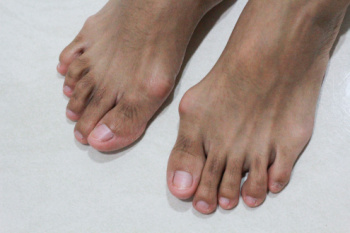
Hallux valgus, more commonly known as a bunion, is caused by a change in the alignment of the toes. A bump forms at the base of the big toe as the top moves inward toward the other toes. As the condition progresses, it can cause pain, swelling, redness, and difficulty in finding comfortable shoes. In some cases, the misalignment can result in additional issues like hammertoes. Bunions are often caused by an inherited foot structure, wearing tight or high-heeled shoes, and repetitive stress on the feet. Conditions like flat feet or arthritis can also contribute to the development of hallux valgus. A podiatrist can help manage bunions by offering conservative treatments, including custom orthotics, shoe modifications, and padding to alleviate pressure. In more severe cases, surgery may be recommended to correct the deformity and relieve pain. If you have developed a bunion, it is suggested that you schedule an appointment with a podiatrist for appropriate treatment.
If you are suffering from bunion pain, contact one of our podiatrists of Advanced Foot and Ankle Centers, Inc.. Our doctors can provide the care you need to keep you pain-free and on your feet.
What Is a Bunion?
Bunions are painful bony bumps that usually develop on the inside of the foot at the joint of the big toe. As the deformity increases over time, it may become painful to walk and wear shoes. Women are more likely to exacerbate existing bunions since they often wear tight, narrow shoes that shift their toes together. Bunion pain can be relieved by wearing wider shoes with enough room for the toes.
Causes
- Genetics – some people inherit feet that are more prone to bunion development
- Inflammatory Conditions - rheumatoid arthritis and polio may cause bunion development
Symptoms
- Redness and inflammation
- Pain and tenderness
- Callus or corns on the bump
- Restricted motion in the big toe
In order to diagnose your bunion, your podiatrist may ask about your medical history, symptoms, and general health. Your doctor might also order an x-ray to take a closer look at your feet. Nonsurgical treatment options include orthotics, padding, icing, changes in footwear, and medication. If nonsurgical treatments don’t alleviate your bunion pain, surgery may be necessary.
If you have any questions, please feel free to contact our offices located in Clovis and Madera, CA . We offer the newest diagnostic and treatment technologies for all your foot care needs.
